28 February 2022 · 6 MIN READ
Why the UAE Is Betting So Heavily on Argentina
Land, energy, food: the reasons behind the UAE's growing interest in Argentina.
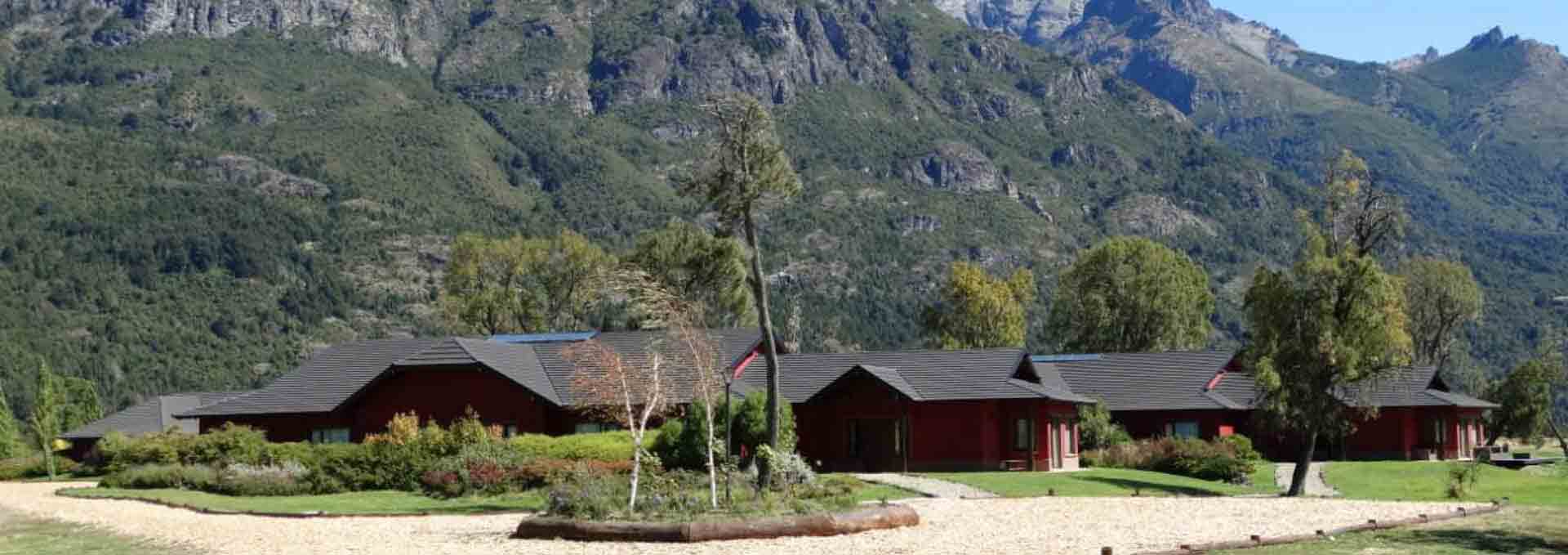
In late February 2026, the President of the United Arab Emirates and Emir of Abu Dhabi, Mohammed bin Zayed Al Nahyan, traveled privately to Argentina. His destination: rural properties in the province of Río Negro, deep in Patagonia. It wasn't a diplomatic visit or a business forum. It was something more revealing: a head of state visiting his own assets in person, on the other side of the world.
That image captures something worth understanding well: the Emirati presence in Argentina is neither a new nor a casual phenomenon. It is the result of decades of quiet strategy that is now reaching a new scale.
The exact moment the scale changed
The Emir's visit came just days after XRG — the international investment arm of ADNOC, the Emirati state oil company — signed the Joint Development Agreement (JDA) alongside YPF and Italy's Eni for the Argentina LNG project: a floating gas liquefaction plant with the capacity to export 12 million tonnes per year from the coast of Río Negro, fed by gas from Vaca Muerta.
It is no coincidence that the Emir chose that moment to travel. The overlap between the most ambitious energy agreement in Argentina's recent history and a private visit to properties in the very province where the LNG export infrastructure will be built says a lot about how Gulf leaders think: holistically, with a long-term horizon, combining productive investment, territorial presence and personal relationships.
A strategy with deep roots
The Arab presence in Argentina didn't begin with the LNG agreement or with the Milei administration. Its roots go back much further.
In 1995, Buenos Aires hosted the first Euro-Arab Economic Summit at La Rural in Palermo, with delegations from 22 Arab states and at least four heads of state. Neuquén took an active role with its hydrocarbons agenda; Río Negro brought INVAP, the aerospace technology company based in Bariloche.
Ten years later, in 2005, the First South America-Arab Countries Summit (ASPA) was held, with active Argentine participation. Then, following the 2008 global financial crisis, Gulf countries — especially the UAE and Saudi Arabia — redefined their global strategy: beyond petrodollars, they began betting on real assets worldwide, focusing on land for food security and sovereign investment funds.
Argentina entered that map early on.
What the UAE holds in Argentina today
The Emirati presence in Argentina spans several fronts at once.
In energy, the JDA signed with YPF and Eni for Argentina LNG is the most recent and largest-scale move. But the UAE also holds stakes in other energy and water infrastructure projects in Patagonia.
In rural land, members of Emirati royal families own estates in Río Negro, in the Andean foothills, tied to high-end tourism, sport hunting and agribusiness projects. Unlike other foreign investments in Argentine land, these include infrastructure built for personal use: hydroelectric works, quarries, private access roads.
On the financial and institutional side, the Bilateral Investment Treaty ratified by Argentina in 2024 creates the legal framework that protects all of these assets and enables new operations with greater legal predictability.
The logic behind the Emirati strategy
To understand why the UAE is betting so heavily on Argentina, you have to understand what Gulf monarchies are after at this point in history.
It's no longer just about parking petrodollars in financial assets. The agenda of Emirati sovereign funds — ADNOC, Mubadala, ADQ — is built around three pillars: food security (producing or controlling food for a population that cannot feed itself), energy diversification (positioning for the global shift toward gas and renewables before oil loses its central role), and geopolitical projection (having a presence in strategic regions of an emerging multipolar world).
Argentina fits all three. It is one of the world's largest food producers and exporters. It holds, in Vaca Muerta, one of the largest shale gas deposits on the planet. And its position on the South Atlantic makes it a key waypoint for trade and logistics routes.
What this means for the Argentina–UAE corridor
For those working or investing in the bilateral corridor, this context has direct implications.
The deepening relationship between the two countries — from the BIT to the Argentina LNG's JDA, to the Emir's visit — creates a more favorable ecosystem for business in both directions. Argentine companies now have more channels to access the Emirati market, and UAE investors have more reasons and more tools to operate in Argentina.
The timing is unusually favorable: Milei's Argentina is actively seeking Gulf capital, and the UAE is actively seeking assets in the Global South. That convergence of interests, now backed by solid legal frameworks and concrete projects underway, is a window that won't stay open forever.
Understanding the real scale of the Emirati presence in Argentina — its history, its logic and its scope — is the first step to making the most of it.