9 May 2026 · 7 MIN READ
YPF, Eni and XRG Sign Historic Agreement to Export LNG from Vaca Muerta to the World
The agreement lays out the first complete value chain to export liquefied natural gas from Argentina to global markets.
Some moments mark a before and after in a country's energy history. February 12, 2026 was one of them for Argentina.
With the signing of a Joint Development Agreement (JDA) between YPF, Italy's Eni, and XRG — the international investment arm of ADNOC, the Abu Dhabi National Oil Company — the Argentina LNG project stopped being a promise and became a concrete roadmap. Three giants of the global energy industry sat down at the same table to turn the massive potential of Vaca Muerta into liquefied natural gas bound for international markets.
The agreement sets a production capacity of 12 million tonnes per year (MTPA) through two floating liquefaction units (FLNG). This is not just an infrastructure project: it is Argentina's biggest bet to become a heavyweight player in the global LNG market, and possibly the most significant hydrocarbon investment the country has attracted in decades.
What does this agreement really involve? Why now? And what opportunities does it open up for Argentina and the United Arab Emirates?
What is the Joint Development Agreement, and what did the parties sign?
The JDA is not the final investment decision — that is expected in the second half of 2026 — but it is the structural step that precedes it. Through this agreement, YPF, Eni and XRG establish the joint work plan that defines how they will move toward that decisive milestone.
In practical terms, the partners commit to carrying out Front-End Engineering Design (FEED), along with technical structuring work and the main commercial and financing workstreams. In other words, they are moving from paper to actual engineering.
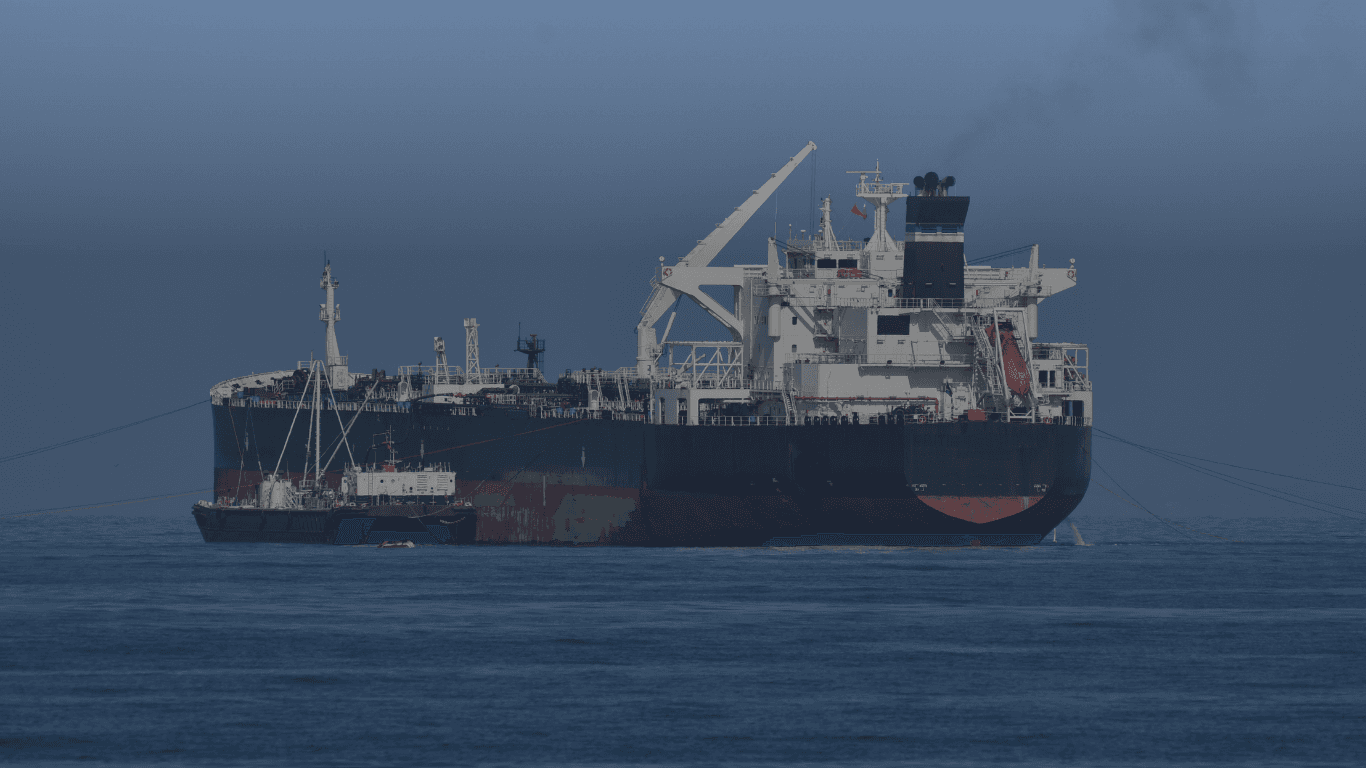
The project itself covers every stage of the chain: production, processing, transport and export of LNG. The two floating liquefaction units (FLNG), 6 MTPA each, would be installed off the Argentine coast to receive gas from Vaca Muerta and turn it into LNG ready for export.
The players: who's who in this agreement
YPF is Argentina's majority state-owned oil company and the project's lead operator. With a dominant presence in Vaca Muerta — the shale gas and oil formation that places Argentina among the world's four largest unconventional reserves — YPF brings the most valuable asset of all: the resource itself.
Eni is one of Europe's most important energy companies, with decades of experience in LNG projects across Africa, Asia and South America. Its presence in the consortium brings technical capacity and market access.
XRG is the international energy investment arm of ADNOC (Abu Dhabi National Oil Company), one of the largest oil and gas producers in the world. Its involvement marks a qualitative leap: XRG holds investments in Africa, Asia and North America, and its backing gives the project financial credibility and access to strategic buyers in high-value markets.
Why this project is strategic for Argentina
In Vaca Muerta, Argentina holds one of the largest unconventional hydrocarbon deposits in the world. For years, though, the numbers didn't add up: production costs were high, infrastructure was insufficient, and the regulatory framework was unstable. That has changed.
The Incentive Regime for Large Investments (RIGI), presented by the Argentine government as a tool to attract international capital under clear and predictable rules, was a key factor in unlocking agreements like this one. Horacio Marín, YPF's president and CEO, pointed this out during ADIPEC 2025 in Abu Dhabi, when the preliminary agreement with XRG was announced.
For Argentina, Argentina LNG represents much more than an energy project:
Foreign currency: Exported LNG would generate a steady stream of dollar revenue for decades.
Quality jobs: Building and operating the FLNG units and associated infrastructure requires thousands of skilled jobs.
Export diversification: A country historically dependent on agricultural commodities would gain gas as a second export pillar of global weight.
Geopolitical positioning: Becoming a reliable LNG supplier for Europe and Asia places Argentina in strategic conversations it previously had no access to.
Marín was emphatic: "From now on, we will keep working very intensively to reach the Final Investment Decision during the second half of 2026."
The global context: why Argentine LNG arrives at just the right time
The global liquefied natural gas market is going through a structural transformation. Since Russia's invasion of Ukraine in 2022, Europe has urgently accelerated its energy diversification, looking for new suppliers to replace Russian gas. Asia — particularly Japan, South Korea and Southeast Asia — remains the world's largest LNG market, with growing demand.
Against that backdrop, Argentina LNG emerges as a long-term solution: a supplier with giant reserves, located in the Southern Hemisphere (which means seasonality that complements northern markets), backed by top-tier partners that guarantee the project's quality and delivery.
Guido Brusco, COO of Global Natural Resources at Eni, summed it up clearly: the project "stands out as one of the most promising opportunities on the global gas landscape," with technological leadership and a long-term strategic vision.
What comes next: the road to the Final Investment Decision
The signing of the JDA sets off a series of concrete technical and commercial stages. The three partners will work in parallel on:
Basic engineering (FEED), which precisely defines the project's costs, timelines and technical specifications.
Structuring the financing, which involves multilateral banks, investment funds and potentially institutions such as the IDB or the World Bank.
Long-term sales contracts (off-take agreements) with buyers in Europe and Asia, which form the basis on which the financial viability of any LNG project is built.
The goal is to reach the Final Investment Decision (FID) in the second half of 2026. If that timeline holds, Argentina LNG could begin commercial operations before 2030.
How this agreement affects opportunities for Argentina and the United Arab Emirates
The signing of the JDA doesn't just matter for Argentina's energy sector: it opens a far-reaching geopolitical and economic dimension for both countries.
For Argentina, XRG's involvement — and, behind it, ADNOC's — means the backing of one of the world's most solvent economies for one of its most ambitious projects. The United Arab Emirates has access to patient capital, commercial networks across Asia, and credibility with global institutional investors. XRG's choice of Argentina as an investment destination sends a powerful signal to the rest of the market: the country is bankable, has clear rules of the game, and has the resource base to support projects of this scale. What's more, the relationship with Abu Dhabi could translate into LNG sales contracts to Asian markets where XRG already has established relationships, shortening the time a new project typically needs to find buyers.
For the United Arab Emirates, participating in Argentina LNG is part of a broader global energy diversification strategy. XRG isn't just after financial returns: it wants to position itself as a relevant player in the LNG supply chain for the 21st century, at a time when gas remains a key piece of the energy transition. Investing in Vaca Muerta means betting on one of the few unconventional gas assets in the world with the scale, geology and regulatory framework to justify an investment of this magnitude. For the UAE, diversifying its energy assets geographically also reduces reliance on a single region and strengthens its negotiating position in international energy markets.
Ultimately, this agreement is an example of how the interests of two countries with very different histories and geographies can converge around a strategic resource. Argentina has the gas; the Emirates have the capital, the network and the experience. What they build together could redefine the global energy map over the next decade.
Original source: Infobae – February 12, 2026